

If you’ve been called out for “selling” in a game chat or a group text, you might be wondering exactly what that means and whether it’s an insult. Selling is internet slang that describes hurting your team’s chances through mistakes, bad decisions, or poor performance, usually without meaning to lose on purpose. It started in gaming but now shows up everywhere from texting to sports commentary.
This guide breaks down what selling really means, how it’s used across gaming, texting, and social media, and how it compares to similar terms like throwing, choking, and griefing.
Meaning & Explanation
Selling, as slang, means damaging your own or your team’s chance of success through careless mistakes or weak performance. In gaming specifically, it usually describes a player who makes costly errors, misses easy plays, or performs so badly that it feels like they’re actively working against their own team.
Importantly, selling doesn’t necessarily mean losing on purpose. That distinction matters a lot. Someone who’s “selling” might just be having a bad game, panicking under pressure, or making avoidable mistakes not deliberately sabotaging the outcome.
Over time, the word expanded beyond gaming. People now use “selling” in texting and everyday conversation to describe any situation where someone messes up an opportunity, makes a bad call, or undercuts their own position: a group project, a first date, a job interview, or even a simple decision.
Tone & Context Variations
The word “selling” changes meaning depending on tone, even when the wording stays the same. Here’s how that plays out:
- Playful “Bro you’re selling 😭” said between friends after a funny mistake.
- Frustrated, “Stop selling, we’re about to lose the whole game.”
- Sarcastic “Oh nice sell” after an obvious blunder.
- Competitive “He’s been selling all matches, we need a sub.”
- Everyday/non-gaming “You sold that interview, why’d you say that?”
The same sentence can be lighthearted teasing or genuine frustration depending on punctuation, emojis, and the relationship between the people talking. Reading tone matters just as much as reading the words themselves.
Selling Meaning Gen Z
Gen Z and younger internet users use “selling” heavily across gaming platforms, TikTok, Discord, and text messages, but it isn’t exclusively Gen Z slang, it’s simply popular within the online spaces Gen Z spends the most time in.
Common phrases include:
- “You’re selling” you’re currently playing or performing badly.
- “He sold” he made a costly mistake or lost his advantage.
- “Don’t sell” is a warning not to mess up an easy situation.
- “Massive sell” is an especially bad or game-changing mistake.
These phrases spread quickly through gaming clips, reaction videos, and meme culture, which is part of why they feel tied to younger internet users even though the underlying idea of blowing an easy win isn’t new at all.
Real Chat Examples (Natural & Relatable)

Gaming:
“Why’d you push alone? That’s such a sale.” “My bad, I panicked.”
Sports:
“He missed an open goal, that’s a total sell.” “Rough moment for him.”
Texting:
“You told her WHAT? You sold yourself so hard 💀” “I know, I panicked.”
School/everyday:
“I forgot my notes for the presentation, I sold so badly.” “It happens, don’t stress.”
Social media:
“This clip is a masterclass in selling lol” “Painful to watch honestly.”
Self-deprecating:
“Ngl I sold that whole game, my fault.” “We’ve all been there.”
Grammar & Language Role
“Selling” is the present participle of the verb “sell,” formed with the standard -ing ending. The slang meaning builds directly on the literal verb just as selling a physical item means giving it away for something in return, slang “selling” implies giving away a winning position or advantage.
Common grammatical forms include:
- “You’re selling” (present continuous)
- “He sold” (past tense)
- “Don’t sell” (imperative/command)
- “I sold” (first-person past tense)
Selling is not an acronym or initialism, it’s a regular English verb used metaphorically, which is part of why it fits naturally into normal sentence structure without needing explanation for most casual readers.
How to Reply When Someone Says “Selling”
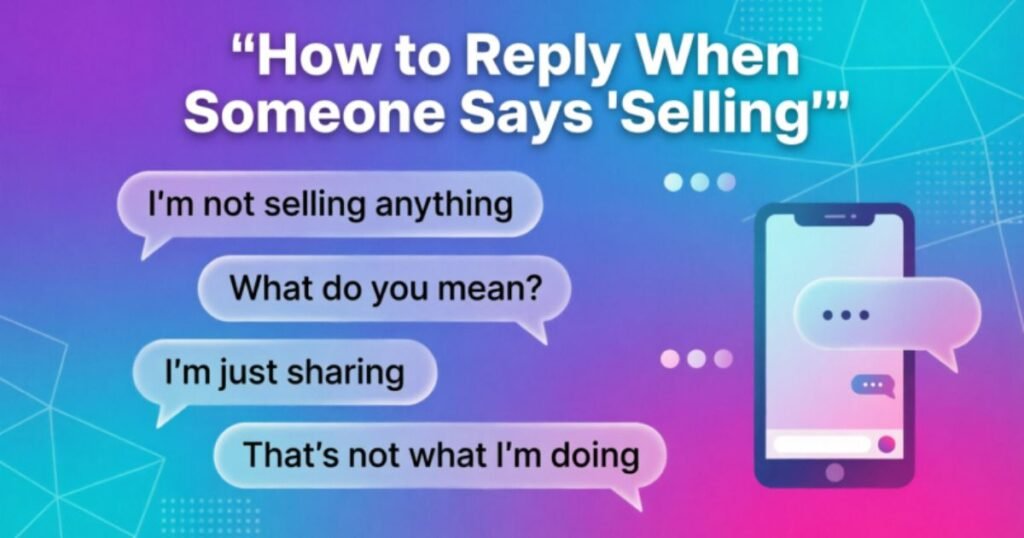
How you respond depends heavily on the speaker’s tone:
- Funny reply: “I sold it for a great price, no refunds.”
- Serious reply: “Yeah, that was on me, I’ll do better.”
- Confident reply: “One mistake doesn’t mean I’m selling the whole game.”
- Polite disagreement: “I don’t think that’s fair, I was just outplayed.”
If the comment is playful, matching that energy usually works best. If it’s genuinely frustrated or accusatory, a calm, direct response tends to defuse tension faster than getting defensive.
Selling Slang Origin
The slang use of “selling” most likely developed within competitive gaming and esports communities, where players needed quick, casual language to call out costly mistakes in real time. The underlying metaphor is straightforward: giving away a winning position is like “selling” your advantage to the other side, even though nothing is literally exchanged.
Also Read This: BBC Meaning Decoded
There isn’t strong documented evidence pinpointing an exact origin date or platform, so it’s best understood as a natural extension of existing gaming slang rather than a term traceable to one specific moment. What is clear is that social media accelerated its spread of gaming clips, reaction content, and short-form video made the term visible far beyond hardcore gaming circles, which is how it eventually reached everyday texting and casual conversation.
Comparison Table: Selling vs Throwing vs Choking vs Griefing
These four terms often get used interchangeably, but they describe different situations.
| Term | Basic Meaning | Intent Required | Common Context | Example |
| Selling | Hurting the chances of success through mistakes or poor performance | No | Gaming, sports, texting, social media | “You’re selling this game.” |
| Throwing | Deliberately giving away a winning position or causing a loss | Usually yes | Gaming and sports | “He threw the match.” |
| Choking | Failing during an important or high-pressure moment | No | Gaming and sports | “He choked in the final round.” |
| Griefing | Deliberately disrupting or ruining another player’s experience | Yes | Multiplayer gaming | “He’s griefing the team.” |
The biggest distinction is intent. Selling and choking usually describe unintentional poor performance, while throwing and griefing typically imply the person meant to cause harm or a loss. These terms overlap in casual conversation, but they aren’t perfectly interchangeable.
Who Uses This Term?
“Selling” is used widely by gamers, particularly in team-based and competitive titles where individual mistakes visibly affect the whole group. Esports communities use it constantly in commentary, chat, and post-match discussion to describe underperformance.
Sports fans have adapted the term too, applying it to athletes who fumble easy opportunities. It’s also common across TikTok, Discord, and Twitch, where gaming clips and live commentary spread the phrase to broader audiences.
There’s no reliable data tying the term to one specific age group exclusively; it’s simply most visible in the online spaces where gaming and short-form content dominate.
Origin & Internet Culture Insight

Gaming culture played the biggest role in popularizing “selling” as slang, since competitive multiplayer games create constant, visible moments where one player’s mistake affects a whole team. Voice chat, text chat, and live-streamed matches gave the term a natural home to spread quickly among players.
Social media then broadened its reach far beyond gaming. Memes, highlight clips, and reaction videos turned “selling” into a recognizable joke format; clips of obvious mistakes get captioned with “the sell of the century” or similar phrases, reinforcing the term for viewers who may not even play the game being clipped.
From there, people started applying “selling” to everyday, non-gaming mistakes, awkward conversations, missed chances, and self-inflicted setbacks because the core idea (giving away an easy win) translates well to ordinary life.
Safety & Appropriateness
“Selling” is not profanity and isn’t considered an offensive term. It’s casual slang, similar to other informal gaming and internet expressions.
That said, depending on tone, it can come across as blaming or insulting, especially if someone repeatedly calls out a teammate or friend for mistakes. Used lightly among friends, it’s generally harmless; used aggressively or repeatedly toward someone, it can feel like criticism dressed up as slang.
For casual conversation, gaming chats, and social media, it’s perfectly appropriate. For formal school or workplace communication, clearer, more direct language (“that approach didn’t work” or “we made some errors here”) is a better fit, since slang like this can come across as unprofessional or unclear outside casual settings.
Brief vs Debrief
These two words are sometimes confused with slang or shorthand terms, but they’re standard English words unrelated to “selling.”
- Brief a short summary or a quick set of instructions given before something happens. Example: “The coach gave a quick brief before kickoff.”
- Debrief a discussion held after an event to review what happened. Example: “The team held a debrief after the match to go over mistakes.”
Both are common in professional and everyday English and carry no connection to gaming or texting slang.
Experience-Based Insight
When you’re not sure whether “selling” applies to a situation or whether it’s the right word compared to throwing, choking, or griefing a simple three-step check helps:
- Identify the situation. Was this a high-pressure moment, an easy play, or an ongoing pattern of mistakes?
- Identify what the person did. Did they make an honest mistake, or does it look deliberate?
- Identify the speaker’s tone. Is this playful teasing, genuine frustration, or a serious accusation?
Running through these three questions quickly usually clarifies which term actually fits. A single missed shot under pressure is more likely choking; a pattern of careless mistakes is closer to selling; and a play that looks deliberate leans toward throwing or griefing.
Conclusion
At its core, “selling” is slang for hurting your own chances through mistakes or weak performance, most often without any intention to actually lose. It’s used constantly in gaming, but has spread naturally into texting, sports commentary, and everyday social media conversation.
While it overlaps with terms like throwing, choking, and griefing, the key difference is intent selling and choking are usually accidental, while throwing and griefing suggest a deliberate act. In short: if someone says you’re “selling,” they mean your mistakes are costing you the win, not that you’re trying to lose.

Welcome to Meaning Mints! I ‘m Olivia Justin , an Ai-powered SEO, and Content Writer with 4 years of experience.
I help website rank higher, grow traffic , and look amazing. My goal is to make SEO and web design simple and effective for everyone.
Let’s achieve more together |
